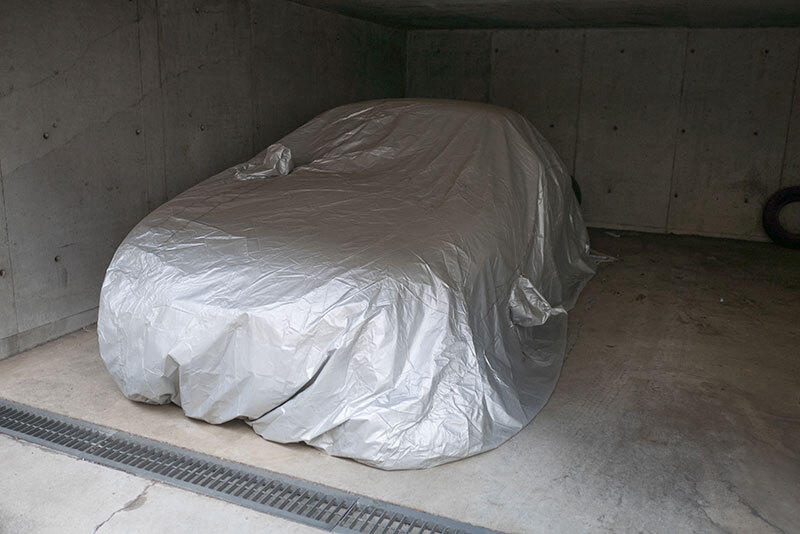
Before renting vehicle storage, one of the first things you need to know is simple: how big is your vehicle?
Car dimensions matter because even a few inches can make the difference between a comfortable fit and a storage space that feels too tight. A compact car, mid-size sedan, full-size SUV, pickup truck, motorcycle, boat, and trailer all need different amounts of space.
If you are looking for car storage in Hampshire, IL, knowing your vehicle’s length, width, and height can help you choose the right storage unit or parking space from the start. Need vehicle storage in Hampshire, IL? View available 10x20, 10x25, indoor vehicle storage, motorcycle parking, and outdoor parking options at Herrmann’s Storage.
Below, we will break down average car dimensions, common vehicle sizes, how to measure your car, and what size storage unit you may need.
| Vehicle | Length | Width |
|---|---|---|
| Chevrolet Equinox | 15.3 ft | 6.3 ft |
| Chevrolet Silverado | up to 20.2 ft | 6.8 ft |
| Chevrolet Trax | 14.9 ft | 6.0 ft |
| Ford Explorer | 16.6 ft | 6.6 ft |
| Ford F-Series | up to 20.8 ft | up to 7.3 ft |
| GMC Sierra | up to 20.2 ft | 6.8 ft |
| Honda Civic | up to 15.3 ft | 5.9 ft |
| Honda CR-V | 15.4 ft | 6.1 ft |
| Hyundai Tucson | 15.3 ft | 6.1 ft |
| Jeep Grand Cherokee | 16.2 ft | 6.5 ft |
| Jeep Wrangler | up to 15.8 ft | 6.2 ft |
| Kia Sportage | 15.3 ft | 6.1 ft |
| Nissan Rogue | 15.3 ft | 6.0 ft |
| Ram Pickup | up to 20.2 ft | 6.8 ft |
| Subaru Forester | 15.3 ft | 6.0 ft |
| Tesla Model Y | 15.6 ft | 6.3 ft |
| Toyota Camry | 16.1 ft | 6.0 ft |
| Toyota Corolla | up to 15.3 ft | 5.8 ft |
| Toyota RAV4 | 15.1 ft | 6.1 ft |
| Toyota Tacoma | up to 18.9 ft | up to 6.5 ft |
The average car is about 14.7 feet long, around 5.8 feet wide, and roughly 4 to 5 feet tall.
That number is helpful as a starting point, but it does not tell the whole story. Compact cars are much shorter. Full-size SUVs and pickup trucks can be several feet longer, wider, and taller than the average vehicle.
Here is a general breakdown:
| Vehicle Size | Average Length | Average Width | Average Height |
|---|---|---|---|
| Compact car | 10 to 14 feet | 5.5 to 6 feet | 4.5 to 5 feet |
| Mid-size car | 14 to 16 feet | Around 6 feet | 5 to 5.5 feet |
| Full-size car | 16 to 18 feet | 6 to 7 feet | 5.5 to 6 feet |
| Compact SUV | 14 to 15 feet | Around 6 feet | 5 to 5.5 feet |
| Mid-size SUV | 15 to 16.5 feet | 6 to 6.5 feet | 5.5 to 6 feet |
| Full-size SUV | 16 to 18.5 feet | 6.5 to 7 feet | 6 feet or taller |
| Pickup truck | 17 to 21+ feet | 6.5 to 7+ feet | 6 feet or taller |
These are averages, so always check your specific make and model before renting storage.
Different vehicle types can vary a lot, even when they fall into the same general size category. A Toyota Camry, for example, is very different from a Ford F-150, even though both are common vehicles.
Compact cars are usually some of the easiest vehicles to store. They are shorter, narrower, and easier to maneuver into storage spaces.
Common examples include:
Most compact cars are roughly 14 to 16 feet long, while subcompact cars may be closer to 10 to 14 feet. Some may fit in a smaller enclosed unit, but a 10x20 storage unit usually gives more breathing room.
Mid-size cars are among the most common vehicles on the road. They offer more passenger space and cargo space than compact cars while still being easy to park and store.
Common examples include:
A mid-size car is usually 14 to 16 feet long. For this type of vehicle, a 10x20 storage unit is often a strong choice.
Full-size cars are longer and roomier. They may still fit in a 10x20 unit, but depending on the exact model, you may want extra space.
Common examples include:
Full-size cars usually measure 16 to 18 feet long. If the car is closer to 18 feet, or if you want room to walk around it, a larger unit or parking space may be better.
SUVs can be tricky because they vary so much. A compact SUV may store like a small car, while a full-size SUV may need the same amount of space as a truck.
Common examples include:
SUV height is especially important. Roof racks, cargo boxes, larger tires, and lift kits can affect whether the vehicle fits comfortably in an enclosed unit.
Pickup trucks are often longer than standard cars, especially if they have extended cabs, crew cabs, long beds, trailer hitches, or lifted suspension.
Common examples include:
Many pickup trucks need more than a basic car storage unit. A 10x25 unit, outdoor parking space, or larger parking option may be a better fit.
When choosing vehicle storage, most people think only about length. Length matters, but it is not the only measurement you should check.
Length tells you whether the vehicle can fit from front to back. Measure from the front bumper to the farthest rear point, including anything that sticks out, such as a hitch, spare tire, bike rack, or trailer attachment.
The average width of a car is about 5.8 feet, but that often does not include side mirrors. When storing a vehicle, you need to think about the full width of the car, including mirrors and any aftermarket additions.
You should also consider door clearance. A car might technically fit in a space, but if you cannot open the door enough to get in and out, the fit may not be practical.
Height matters most for SUVs, trucks, vans, and vehicles with accessories. Roof racks, ladder racks, cargo boxes, antennas, and lift kits can all add height.
If you are renting an enclosed storage unit, check height clearance before reserving.
You may also want room for:
A slightly larger storage unit can make a big difference if you plan to access the vehicle or store items around it.
The right storage size depends on your vehicle and how much extra space you want. Here is a practical guide.
A 5x10 space is not meant for most cars, but it can work well for motorcycles, scooters, and some small recreational vehicles.
Best for:
If you are storing a motorcycle indoors, this can be a compact and cost-effective option.
A 10x15 storage unit may work for some compact cars, but it can be tight. This size is best for smaller vehicles where the owner does not need much extra room around the car.
Best for:
Before choosing a 10x15 unit, measure the full length of your vehicle and confirm that the door can close comfortably.
A 10x20 storage unit is one of the most common sizes for car storage. It gives many standard cars enough room to fit indoors while still leaving some space to move around.
Best for:
If you drive something like a Toyota Camry, Honda Accord, Nissan Altima, Toyota Corolla, or Honda Civic, a 10x20 unit is often a good place to start.
A 10x25 storage unit gives you more length and flexibility. This can be helpful for larger vehicles or for customers who want more room around the vehicle.
Best for:
If your vehicle is close to 20 feet long, or if you want extra room for tires, tools, or seasonal items, a 10x25 option may be more comfortable.
Outdoor parking can be a better choice for larger vehicles that may not fit well indoors.
Best for:
Outdoor parking is also useful when height is a concern. Taller trucks, vehicles with roof racks, boats on trailers, and RVs often need open-air space.
There is no single best choice for everyone. The right option depends on the type of vehicle, how long you plan to store it, and how much protection you want.
Indoor vehicle storage gives your car more protection from weather, dust, sun exposure, wind, and debris. This can be a smart choice for vehicles you care about long term.
Good for:
In Illinois, indoor storage can be especially useful during colder months when snow, ice, road salt, and freezing temperatures become a concern.
Outdoor parking is usually better for larger vehicles and customers who need easier access.
Good for:
Outdoor parking can also be a more flexible option if your vehicle is too long or too tall for an enclosed unit.
Before reserving a storage unit or parking space, measure your vehicle yourself. Do not rely only on general averages.
Here is what to measure:
Measure from the front bumper to the farthest point in the back. Include hitches, spare tires, bike racks, cargo racks, or anything else that extends past the bumper.
Measure the widest point of the vehicle. Include side mirrors if they do not fold in, oversized tires, fender flares, or aftermarket parts.
Measure from the ground to the highest point of the vehicle. Include roof racks, antennas, cargo boxes, ladder racks, or lift kits.
If you are storing the vehicle indoors, think about how much room you need to open the door. A tight fit may work for long-term storage, but it can be frustrating if you need regular access.
If you plan to store other items with the vehicle, account for that space before choosing a unit.
If you are storing your vehicle for more than a few weeks, a little preparation can help protect it.
Before storage:
For winter storage, it is also a good idea to make sure the vehicle is fully dry before parking it indoors. Moisture, dirt, and road salt can cause problems if left sitting for months.
If you need car storage in Hampshire, IL, Herrmann’s Storage offers convenient options for cars, trucks, motorcycles, boats, trailers, RVs, and other vehicles.
Whether you need indoor vehicle storage, outdoor parking, motorcycle storage, boat storage, or trailer storage, choosing the right size starts with knowing your vehicle dimensions.
A 10x20 space works well for many standard cars and mid-size vehicles. Larger SUVs, pickup trucks, boats, trailers, and RVs may need a larger unit or outdoor parking option.
Not sure what size you need? Measure your vehicle, compare it to available unit sizes, and contact Herrmann’s Storage for help choosing the best fit.
